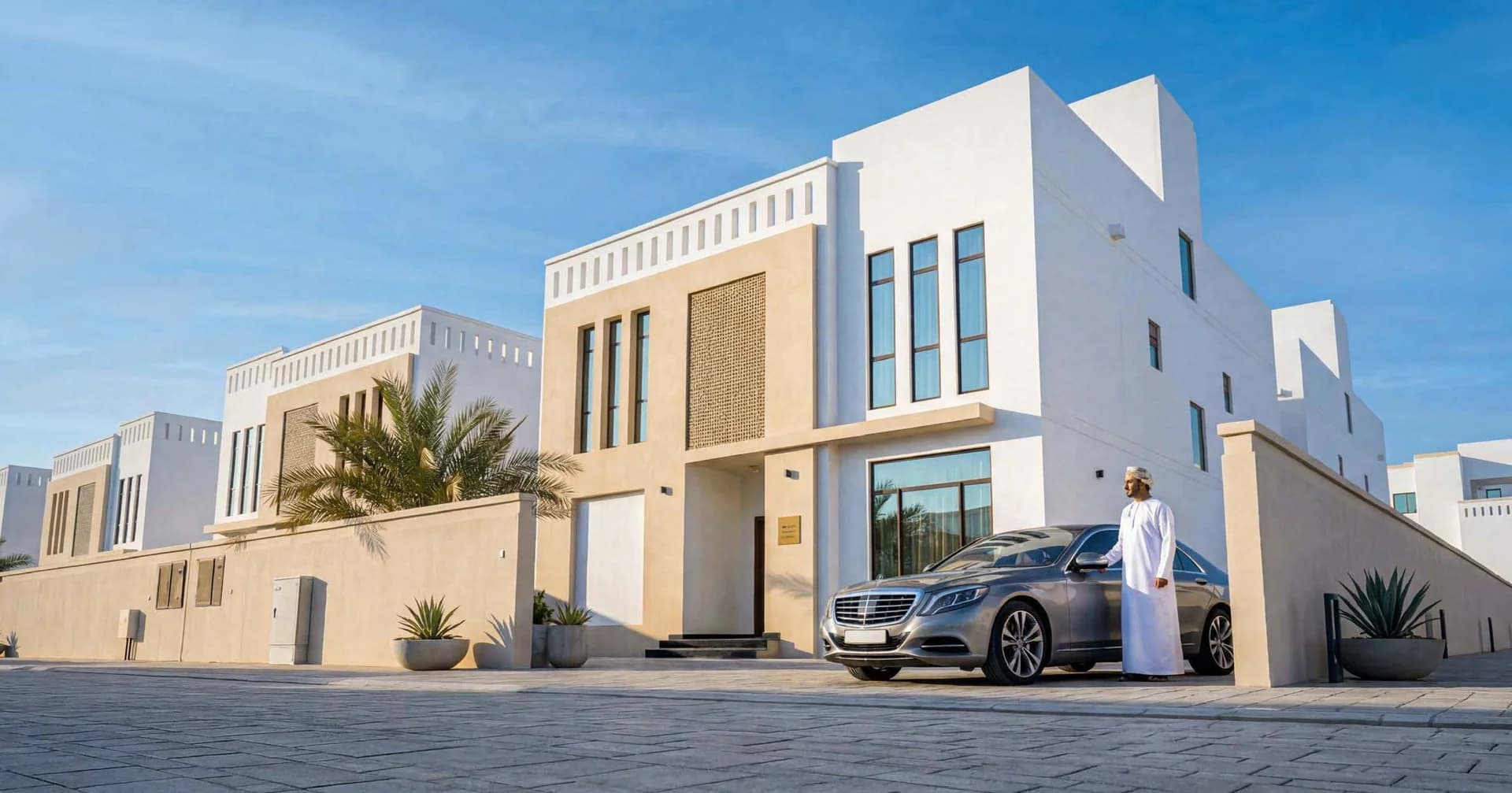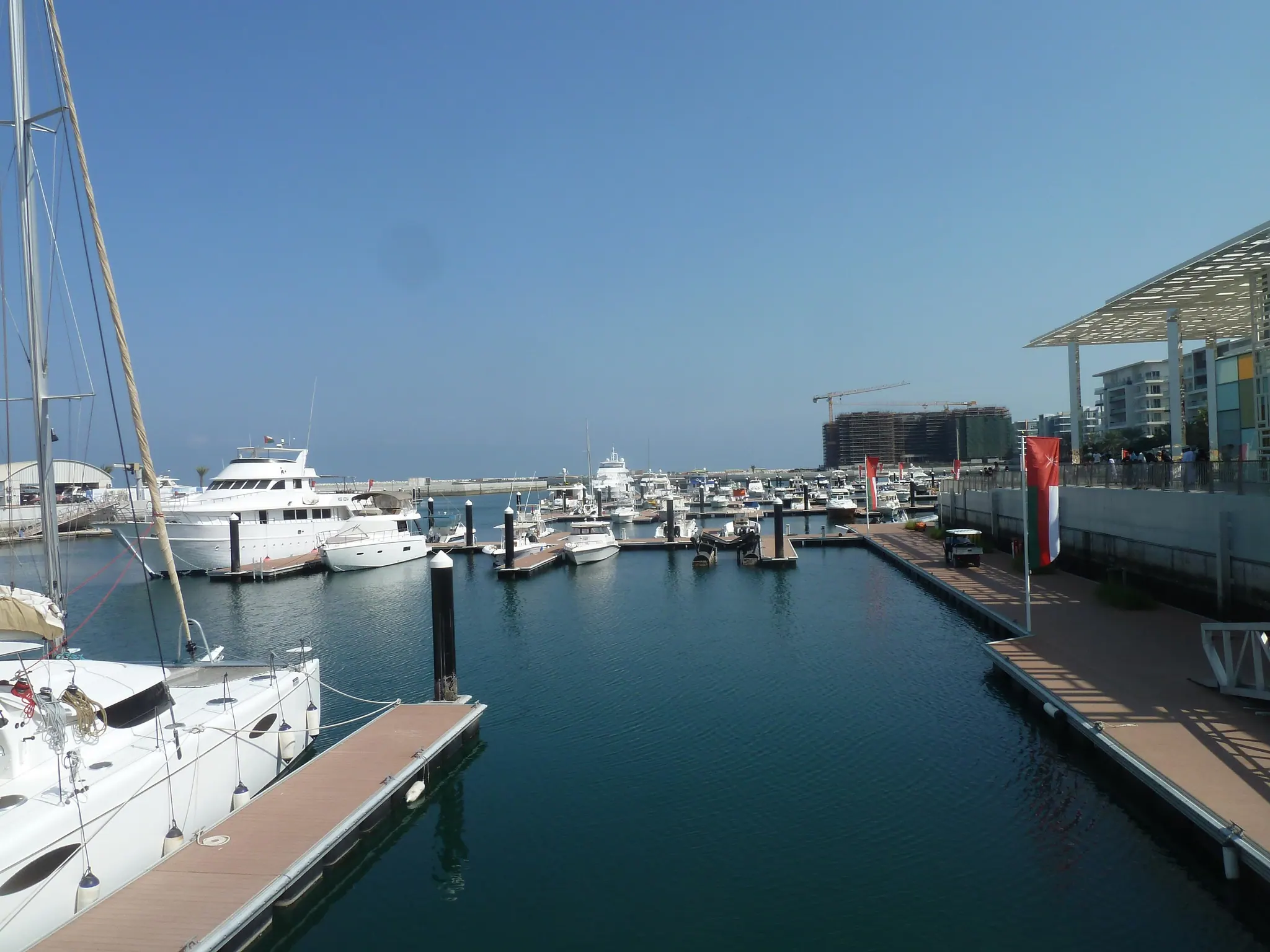
Owning a home in Oman costs less each year than in many countries, because there is no annual property tax. The main yearly cost is the service charge, which pays for the community's shared parts and services. Since March 2026 the Real Estate Regulation Law, Royal Decree 79/2025, has set rules for how those costs are shared and collected, and requires owners' associations. This guide explains service charges inside and outside Integrated Tourism Complexes (ITCs), the other running costs, worked yearly budgets and what to ask before you buy.
The yearly costs of owning a home in Oman
| Cost | Who sets it | Amount |
|---|---|---|
| Property tax, council or land tax | None in Oman | Nil |
| Service charge | The community's budget; owners' association | Varies by community; ask for the budget |
| Utilities: electricity, water, cooling, internet | Suppliers, by meter | By use |
| Upkeep and repairs inside your home | You | Your figure |
| Home insurance | You, or your lender's requirement | Your quote |
| Lease registration, if you let | Municipality | 3% of the rent, paid by the landlord |
| Tourism licence, if you holiday-let | Ministry of Heritage and Tourism | OMR 50 a year for a hospitality house |
| Residence visa for an ITC owner | Royal Oman Police | OMR 50 for two years |
| Income tax, from 2028 | Tax Authority | 5% on net income above OMR 42,000 a year |
The home
Your own yearly costs
Letting
Yearly cost of keeping it
OMR 0
About OMR 0 a month, let or empty.
Share of the price
0%
Each year, before any rent.
Per sqm a year
OMR 0
All costs, on the built-up area.
- Service chargeOMR 0.00 per sqm a year on 120 sqm
- OMR 0
- InsuranceYour figure
- OMR 0
- Electricity, water and internetYour figure, including months when the home is empty
- OMR 0
- Care and repairsYour figure: inspections, cleaning, air-conditioning service
- OMR 0
- Reserve for replacementsYour figure: furniture and appliances
- OMR 0
- Annual property taxOman has no annual property tax
- None
- Running costs a year
- OMR 0
In short
Budget OMR 0 a year to keep the home, before any rent.
Oman has no annual property tax and no stamp duty. A let home's lease is registered at 3% of the rent, paid by the landlord; unregistered leases risk fines. An estimate from your figures, not tax advice: see property costs and taxes in Oman.
Sources for these figures
- PwC Worldwide Tax Summaries, Oman: other taxes (transfer fee, VAT, no property tax, no stamp duty), reviewed 7 July 2026
- Oman Observer, register lease contracts to avoid fines (lease fee cut to 3%), 6 February 2021
- Oman Observer, fines for unregistered rental agreements, 27 January 2021
- Royal Decree 56/2025, Personal Income Tax Law (from 1 January 2028), qanoon.om
- Royal Decree 79/2025, Real Estate Regulation Law (escrow per project and phase; no resale fees), qanoon.om
- Savills listing, The Residences at Mandarin Oriental, Shatti Al Qurum (service charge OMR 39 per sqm a year)
Talk it through
Ask us for a development's actual service charge before you commit: we get it in writing from the developer.
Send me these running costs
Your yearly costs by email, line by line, with an adviser to check them against a development's published charges.
Email me the costs
What a service charge pays for
A service charge pays for running the parts of a building or community that owners share: management, operation, maintenance and repair of common parts and services. In practice that means security, cleaning, landscaping, lifts, pools and gyms, lighting, and in larger communities roads, beaches or marinas. In a branded residence it can include hotel-style services. The higher the level of service, the higher the charge.
Service charges outside ITCs: the 2025 law
Royal Decree 79/2025 applies in full outside ITCs, for example in Sultan Haitham City and in integrated neighbourhoods such as Surouh.
| Rule | Article |
|---|---|
| Owners are co-owners of the land and the common parts, and bear the costs of management, operation, maintenance and repair in proportion to the area of their unit, unless agreed otherwise | 38 |
| Parking spaces and facilities assigned to a unit are part of it and cannot be sold separately | 39 |
| Common parts cannot be turned into private property or used to limit owners' use | 40 |
| Common facilities cannot be changed or re-planned in a way that limits use without the ministry's approval | 41 |
| An owner cannot abandon a share of the common parts to avoid the costs | 42 |
| The developer or association may not stop an owner using the unit or common services to force payment | 43 |
| No changes to the structure or exterior without approval under the regulation and the owners' consent | 44 |
| Each owner maintains and restores his own unit | 45 |
| The court issues a payment order, enforceable at once, against an owner who does not pay | 46 |
| The developer prepares a shared-use management system, approved by the ministry, before selling units | 47 |
| The developer manages the common parts for at least two years after the completion certificate, then hands over to the owners' association | 48 |
Two points help buyers. The charge follows the size of your home, so a 150 square metre apartment pays half the share of a 300 square metre one in the same building, unless the system says otherwise. And the shared-use management system exists before the first sale, so you can ask to see it.
Service charges inside Integrated Tourism Complexes
Article 2 of Royal Decree 79/2025 excludes ITCs from most of the law. The chapter on owners' associations (Articles 49 to 56) does apply in ITCs, unless the ITC's development agreement with the government contains a different provision; the rules on sharing costs by area and on collection (Articles 38 to 48) are not applied to ITCs by the law. Inside an ITC, the basis of the charge, the services and the collection rules come from the community's own rules and your contract.
That makes the documents important. Before you reserve at Al Mouj, AIDA, Jebel Sifah or another ITC, ask for:
- the current service charge budget and the rate per square metre;
- what it covers, and anything charged separately, such as district cooling, beach or club membership;
- the history of increases over recent years;
- whether there is a reserve or sinking fund for major repairs;
- who manages the community, and the owners' association's role.
Owners' associations
The owners' association chapter applies inside and outside ITCs, subject to the development agreement in ITCs.
| Rule | Article |
|---|---|
| An owners' association must be set up for jointly owned property, and runs the common parts by contracting one or more companies | 49 |
| Members are the owners, and usufructuaries under a registered contract; membership starts from the title deed or the registration of the usufruct | 50 |
| The association's by-laws follow a ministerial model and take effect only once approved by the ministry; the developer registers the association with the first sale above a threshold | 51 |
| Associations are recorded in a ministry register and gain legal personality on registration | 52 |
| Where buildings share a project's facilities, a master association runs them | 54 |
| Above a set number of units, an elected board runs the association | 55 |
| The regulation will protect minority owners from a developer or owner holding half or more of the units | 56 |
The executive regulation, due within a year of the law taking effect, will set the thresholds. Attend the general meeting and read the budget: it is where your service charge is decided.
Worked example: a yearly budget
Oman has no published market range for service charges. The one published figure is OMR 39 per square metre a year at The Residences at Mandarin Oriental, Shatti Al Qurum, a branded residence with hotel services; most communities will differ. The example below uses that figure only to show the arithmetic.
| Line | 100 sqm apartment, owner-occupied | Same apartment, let |
|---|---|---|
| Service charge at OMR 39 per sqm | OMR 3,900 | OMR 3,900 |
| Utilities | Owner pays: your figure | Tenant pays under the lease |
| Insurance and upkeep | Your figure | Your figure |
| Lease registration, 3% of an OMR 664 a month rent | None | OMR 239 |
| Rent received | None | OMR 7,968 |
| Income tax | None | None for a non-resident below OMR 42,000 |
Replace the service charge with the figure for your home, and use the running cost calculator to build the full yearly budget. For a let home, the rental yield calculator takes the service charge off the rent.
Running costs for landlords
A landlord carries the service charge and the repairs needed to keep the home fit for its purpose (Royal Decree 6/89, Article 10), and pays the lease registration fee, 3% of the rent. The tenant pays utilities, municipal charges and sewerage during the lease, unless the lease says otherwise (Article 12). A holiday let shifts utilities, cleaning and furnishing onto the owner, adds the tourism licence and may add a 4% tourism fee. From 1 January 2028 a landlord deducts either actual expenses, the service charge among them, or a flat 15% of gross rent, before the 5% income tax on net income above OMR 42,000 a year. See rental income and tenancy and the 2028 income tax guide.
Costs tied to residence
Owners who live in Oman add the cost of residence. The ROP's residence visa for an owner of a unit in an ITC is valid for two years and costs OMR 50. Resident cards cost OMR 5 for one year, OMR 10 for two and OMR 15 for three under ROP Decision 78/2025. For the 10-year Golden Residency, government fees apply. See the residency guide.
Off-plan homes: the service charge before completion
On an off-plan home the service charge is an estimate until the community is running. Outside ITCs, the developer must have a ministry-approved shared-use management system before it sells, and runs the common parts for at least two years after completion, so the first budgets are the developer's. Ask for the estimate per square metre in writing with the price list, and for what happens if it changes before handover. Our risks and due diligence guide covers the other off-plan checks.
Budget the first year with care. Service charges usually start at handover, before you move in or find a tenant, and fitting out, furnishing and connecting utilities fall in the same months. A buyer who plans to let should allow for the months between handover and the first rent.
What we ask for before a client reserves
For each home we request the service charge budget or estimate per square metre, what it covers and what is charged separately, the owners' association position and, on a resale, a statement showing no arrears. We put the yearly figure into the client's cost sheet next to the purchase costs, so the client sees the full cost of ownership, not only the price. This guide is general information, not legal advice.