Can Bahrainis buy property in Oman?
Yes, and a Bahraini passport opens far more of Oman than any non-Gulf nationality gets. Under Royal Decree 21/2004, citizens of the Gulf Cooperation Council states and companies wholly owned by them may lease and own built-up property and land in Oman, to live in or to invest. For a family from Manama or Muharraq that means a townhouse in Qurum, a plot in Seeb or a house in Salalah town, not only the resort communities.
The Omani government portal (updated 2 July 2026) attaches four conditions to a Bahraini purchase:
- the buyer must be over 21; a younger Bahraini can hold title jointly with a parent;
- a Bahraini may own more than one residential plot;
- bare land may not be sold or invested for four years unless something is built on it;
- the application goes to the Ministry of Housing and Urban Planning on the Amlak platform, costs OMR 5 and takes about 10 days.
Gulf citizens collected 1,252 Omani title deeds in 2025 and 824 in the first nine months of 2026, so the route is well used.
Living in Bahrain on a residence permit is different. An Indian engineer in Juffair or a British banker in Seef holds no GCC ownership rights, and buys in Oman as a foreigner: inside the Integrated Tourism Complexes and the few other areas the Ministry has opened. Our foreign ownership guide maps those areas, and buying from the Gulf compares the GCC and expatriate routes side by side.
Getting from Bahrain to Muscat
Bahraini citizens need no visa. Since 30 March 2022 Gulf nationals can cross into Oman with the national ID card instead of a passport, and Muscat airport has its own counters for them. A non-Bahraini resident applies for the GCC resident visa on the Royal Oman Police eVisa for OMR 5, unless their passport already gives 14 days visa-free; Indians and Egyptians living in Bahrain qualify for that through their Gulf residence. Our visiting Oman guide lists which Bahrain residents need the eVisa.
Gulf Air and Oman Air run about 22 non-stop flights a week from Bahrain International to Muscat, roughly three a day, and the 826 km hop takes about 1 hour 45 minutes. A Thursday evening departure leaves a full Friday and Saturday for viewings. There is no non-stop service from Bahrain to Salalah, so khareef trips connect through Muscat or Dubai.
Families who prefer to drive cross Saudi Arabia and enter Oman on the 725 km Empty Quarter road, opened in December 2021, which reaches Oman at Ibri in Al Dhahirah.
What a home costs in dinars
The Central Bank of Bahrain holds the dinar at BHD 0.376 to the US dollar, and the Omani rial has been pegged at about USD 2.60 since 1986. One rial is therefore about BHD 0.978 (calculated from the two pegs), and the figure does not drift between your reservation and your last instalment. A one-bedroom apartment at ALMAR Residences, listed from OMR 101,853, comes to about BHD 99,600.
Oman charges a 3% registration fee on every sale, whoever the buyer, plus 5% VAT when the home is new from a developer; there is no stamp duty and no yearly property tax. On a new OMR 200,000 villa those come to about OMR 16,000, close to BHD 15,700, before agent and legal fees. The full breakdown is in property costs and taxes in Oman.
Pay by transfer from your Bahraini bank into the escrow account named in the sale contract, since Royal Decree 79/2025 requires one for every project and every phase. Keep the bank statement trail for each payment, because the Omani registry and the developer's bank both ask where the money came from.
Tax: Bahrain, Oman and the 2025 treaty
Bahrain levies no personal income tax, according to PwC, so rent from a flat in Muscat is not taxed in Manama.
Oman and Bahrain signed a double tax agreement on 15 January 2025. Bahrain ratified it on 23 June 2025 and Oman on 2 September 2025 by Royal Decree 62/2025, yet KPMG reported that it had not come into force, and the Oman Tax Authority's list of agreements in force, updated 12 November 2026, still leaves it off.
The treaty will matter more from 1 January 2028, when Royal Decree 56/2025 begins taxing net Omani income above OMR 42,000 a year at 5%, rent and sale proceeds included. A Bahraini letting one or two apartments will usually sit under that line. See Oman's 2028 income tax and property.
Residence: who in Bahrain needs it
A Bahraini owner never needs an Omani residence permit to buy, keep or let a home; the ID card does the work.
For expatriates in Bahrain, a home can carry residence. A completed ITC home of OMR 200,000 or more with a title deed, roughly BHD 195,600, qualifies for the 10-year Golden Residency. Any ITC home brings the Royal Oman Police owner visa, valid two years for OMR 50. The routes are compared on visas and residency.
Where Bahraini buyers look
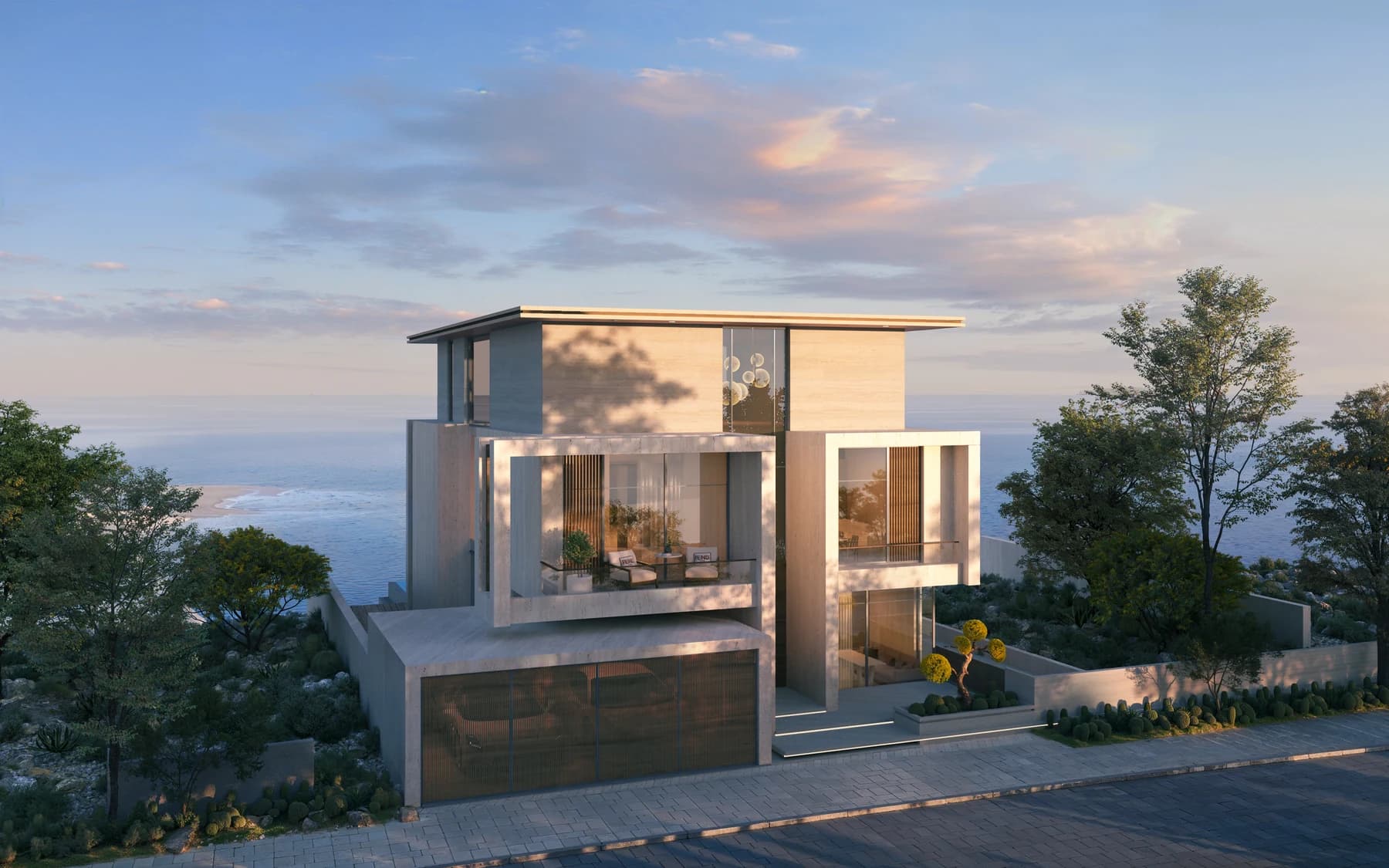
Sea and a short weekend. Most Bahraini buyers want a coastal second home they can reach on a Thursday. Muscat Bay gives a private bay inside the capital. At Jebel Sifah, 40 minutes beyond Muscat, completed seafront homes at The Beachfront resell from OMR 65,000, and golf-side apartments at Solaris start at OMR 81,035.
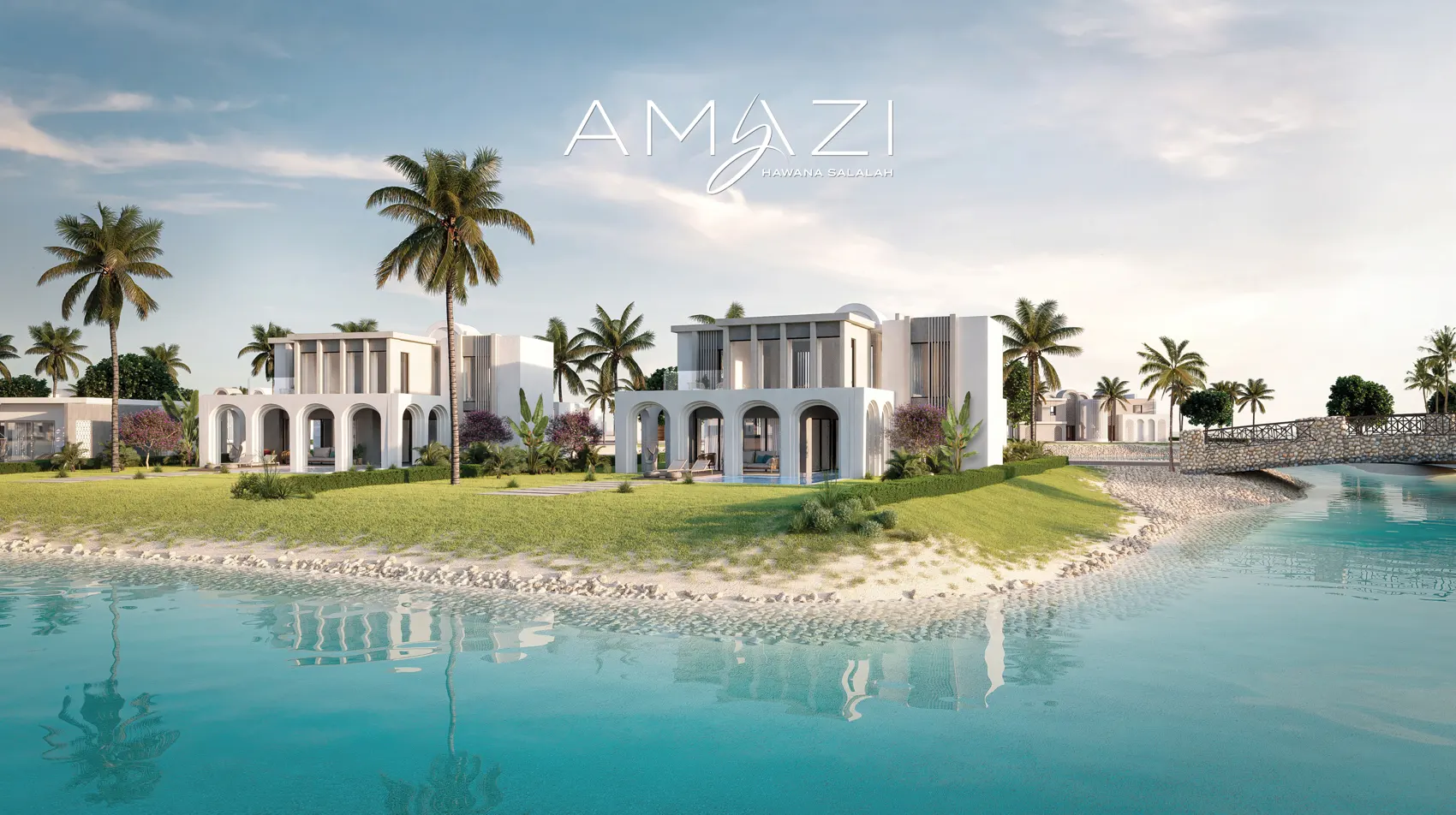
The khareef. Gulf visitors to Dhofar numbered 183,861 between 21 June and 31 August 2026, part of 1,116,051 in all, by the NCSI's preliminary count. A Bahraini family that books a Salalah villa every summer can own one instead: a house in town under the GCC rules, or a lagoon home at Hawana Salalah, where Lubana Island starts at OMR 89,914.
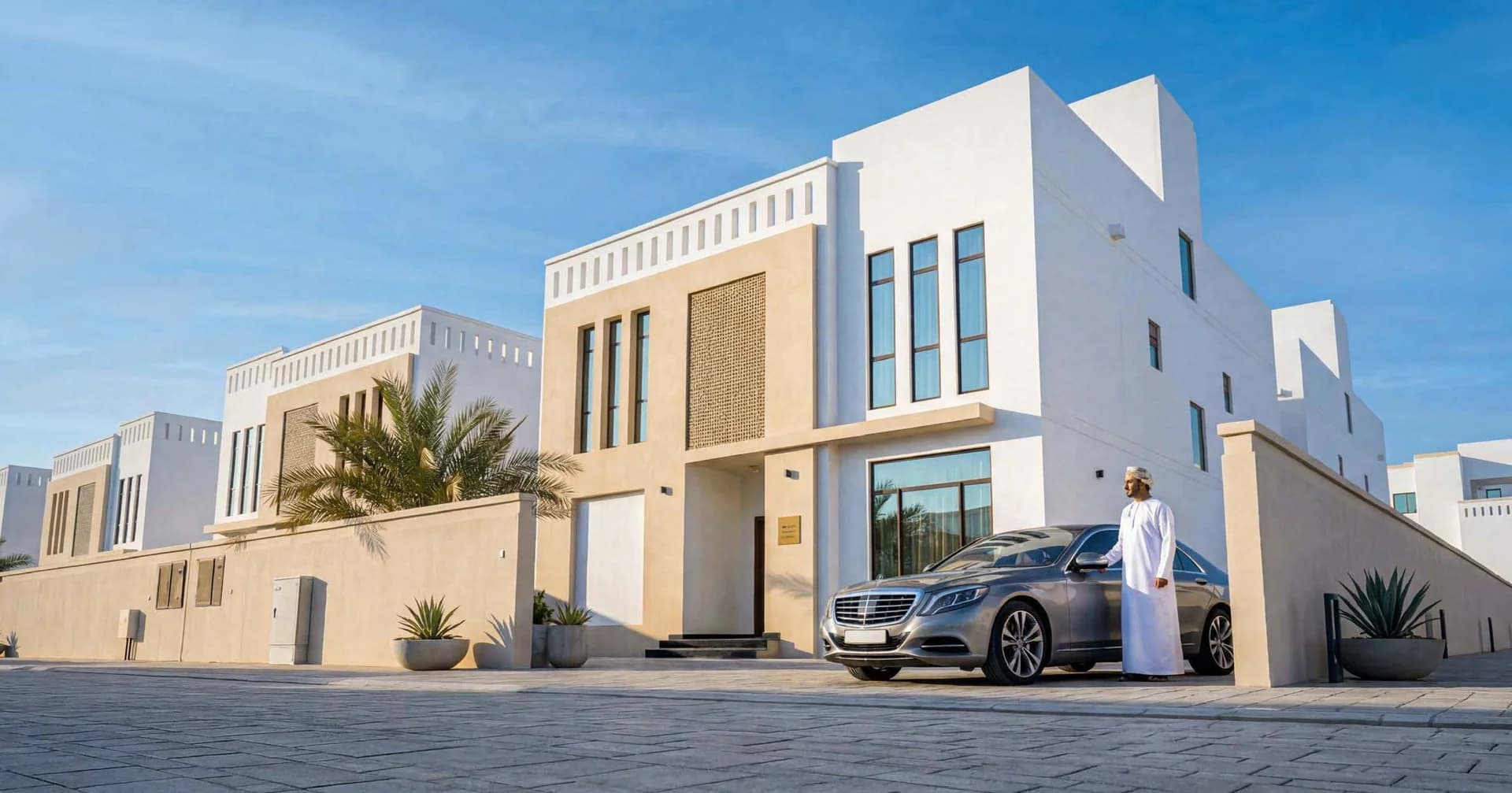
City life. Under the GCC rules a Bahraini can buy an established villa in Qurum or Madinat Al Sultan Qaboos, which foreigners from outside the Gulf cannot. Expatriates in Bahrain usually buy at Al Mouj, next to the airport.
A Bahraini buyer's checklist
- Decide whether you buy as a Bahraini citizen, under the GCC rules, or as a resident of another nationality.
- On bare land, budget to build within four years or accept that you cannot resell before then.
- Ask whether the developer's price includes the 5% VAT.
- Send every payment from your own Bahraini account to the project escrow account, and file the receipts.
- Until the 2025 treaty is in force, ask a tax adviser before letting more than one Omani home.