What the housing ministry said about foreign ownership in June 2026
In the last week of June 2026, Oman's Ministry of Housing and Urban Planning issued a short clarification. Foreign ownership, it said, "has not been opened to all areas of the Sultanate", and the amendments to the residency rules published a few days earlier "relate solely to residency rights", as Gulf News reported on 28 June. Siasat carried the same statement the next day: the changes "do not expand property ownership rights for foreign nationals".
The ministry then listed where non-Omanis may own today. We have not found the ministry's own text of the statement; both reports give the same list.
Why the statement was issued: the June 2026 residency amendments
On 21 June 2026 the Royal Oman Police published Decision 87/2026 in Official Gazette 1653, in force the next day. It amends the executive regulation of the Foreigners Residency Law so that property owners can hold visas and residence without a sponsor, including buyers of a plot prepared for construction or of a unit whose registration is not yet complete. Our article on the property owner visa sets out the detail.
Some coverage read the decision as opening the whole property market. Gulf News described it as a move to attract foreign investment and lift demand, and claims followed that foreigners could now buy anywhere. The ministry's clarification corrected that reading. The decision changes who may live in Oman as an owner. The places where a non-Omani may own are set by other laws, and those did not change.
The designated areas for foreign ownership in Oman
The ministry named three groups. The table gives each group on its own line, with the legal basis we can point to and the tenure each has been given.
| Designated area | Named places | Legal basis | Tenure published |
|---|---|---|---|
| Integrated Tourism Complexes | Al Mouj Muscat, Muscat Bay, Jebel Sifah and Hawana Salalah among them | Royal Decree 12/2006, Article 1 | Ownership of land or units by non-Omani individuals and companies |
| Future cities | Sultan Haitham City, Al Thuraya City, Al Jabal Al Aali | Ministry designation, June 2026 | Not stated |
| Integrated residential neighbourhoods | Surouh, for example | Ministry designation, June 2026 | Not stated |
Two points follow from the table. First, the tourism complexes are the only group with a decree that spells out the right to own: Article 1 of Royal Decree 12/2006 permits non-Omani natural and legal persons to own the plots or units in a licensed complex. Second, for the future cities and the neighbourhoods, the ministry said foreigners may own but did not say on what terms. The designated areas are a list of places, not a statement of title type.
Holders of the 10-year Golden Residency have one extra right: Oman Observer reported at the August 2025 relaunch that they may own "one property outside ITCs", subject to the standard ownership restrictions.
What is still closed to foreign buyers: Royal Decree 29/2018
The law of 2018 that bars non-Omanis from owning in certain places still stands, and the ministry's statement did not touch it. Without prejudice to the tourism complex regime, Article 1 closes these places to non-Omani owners, for every use:
- the governorates of Musandam, Al Buraimi, Al Dhahirah and Al Wusta, and Dhofar except the Wilayat of Salalah;
- the wilayats of Liwa, Shinas and Masirah;
- Jebel Akhdar, Jebel Shams and other mountains of strategic importance;
- all islands;
- sites near palaces and security or military facilities;
- heritage and old districts.
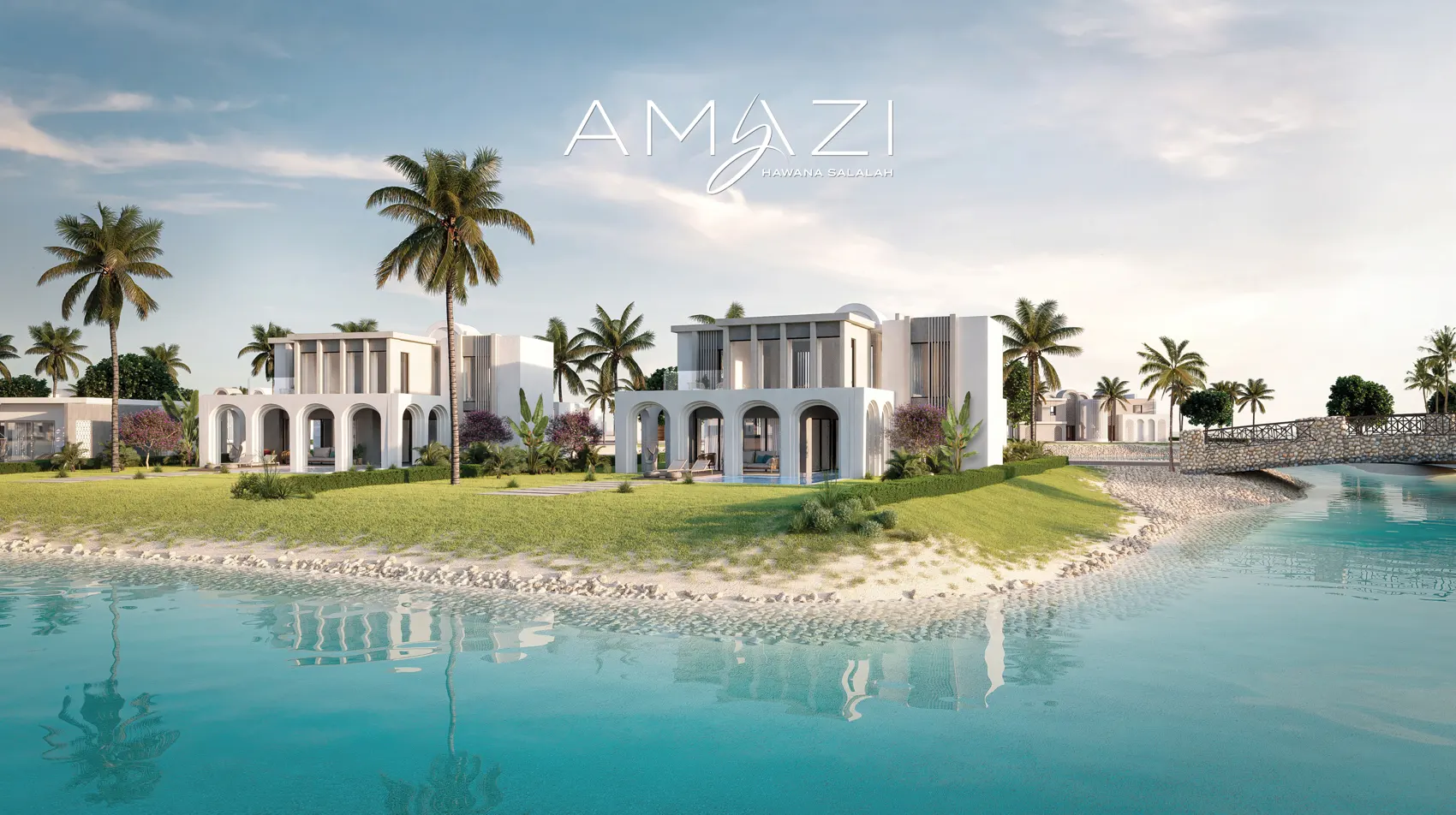
Article 2 adds agricultural land in every governorate. Article 9 makes any transaction in breach of the law void, and Article 10 sets prison terms and fines for anyone who knowingly concludes or brokers one. A licensed tourism complex inside one of these places, such as Hawana Salalah in Dhofar, remains open to foreign buyers under the 2006 decree.
GCC citizens: separate rules, unchanged
The ministry said GCC citizens remain under separate GCC agreements and Omani rules for approved locations. The government portal, updated 2 July 2026, sets out their conditions: the buyer must be over 21, may own "more than one residential land", and may not sell or invest vacant land within 4 years unless at least one building is put on it. Our guide for Gulf buyers covers the process.
Buying in an ITC versus buying in a future city
Both are open to foreign buyers. What differs is what the law and the ministry have written down about each.
Buying in a licensed tourism complex. At a community such as Almar Residences at Al Mouj, the right to own comes from Royal Decree 12/2006, and the owner of a built unit may be granted residence for himself and his first-degree relatives (Article 8). The Royal Oman Police issues a two-year property owner visa for OMR 50, and a completed unit worth OMR 200,000 or more with a title deed is the property route to Golden Residency. Banks that lend to foreign buyers do so on approved projects in these complexes. Our guide to ITCs explains how they work.
Buying in Sultan Haitham City. Foreign buyers can purchase at Sarooj Oasis in Sultan Haitham City, one of the areas the Ministry of Housing and Urban Planning designates for foreign ownership. Buyers from more than 35 nationalities had bought in the city by February 2026, the housing minister said, as Oman Observer reported. The homes are off-plan, with completion scheduled for Q4 2028, and no official text sets the tenure. Ask for the form of the contract and the registration in writing before you pay. Our Sultan Haitham City guide and the area page cover the city itself.
| Question to ask | Where to find the answer |
|---|---|
| Is the plot inside a designated area? | The ministry's list and the developer's licence |
| What exactly will I own? | The sale contract and the registration the ministry will make |
| Which residence route applies? | The ROP certificate route, the ITC owner visa or Golden Residency, case by case |
| Can I borrow against it? | The lender's list of approved projects |
What a buyer should do now
- Treat the designated areas as the map. If a home is not inside a licensed tourism complex, a future city or a neighbourhood the ministry has designated, assume a non-Omani cannot own it, whatever an advert says.
- Separate the visa from the title. Decision 87/2026 can give an owner residence without a sponsor; it does not make an ineligible plot eligible. Read our visa and residency guide before you plan on either.
- Get the tenure in writing. For homes outside the tourism complexes, ask the developer to state in the contract what you will own and how it will be registered.
- Check the developer's licence. Since March 2026 the Real Estate Regulation Law requires a project licence and an escrow account before off-plan sales; our escrow article explains what to check.
- Budget the same fees everywhere. The registration fee is 3% for every buyer, Omani or foreign.
Our foreign ownership guide sets out the rules in full, and the eligibility checker gives a first answer for a specific home.