Oman's climate in brief
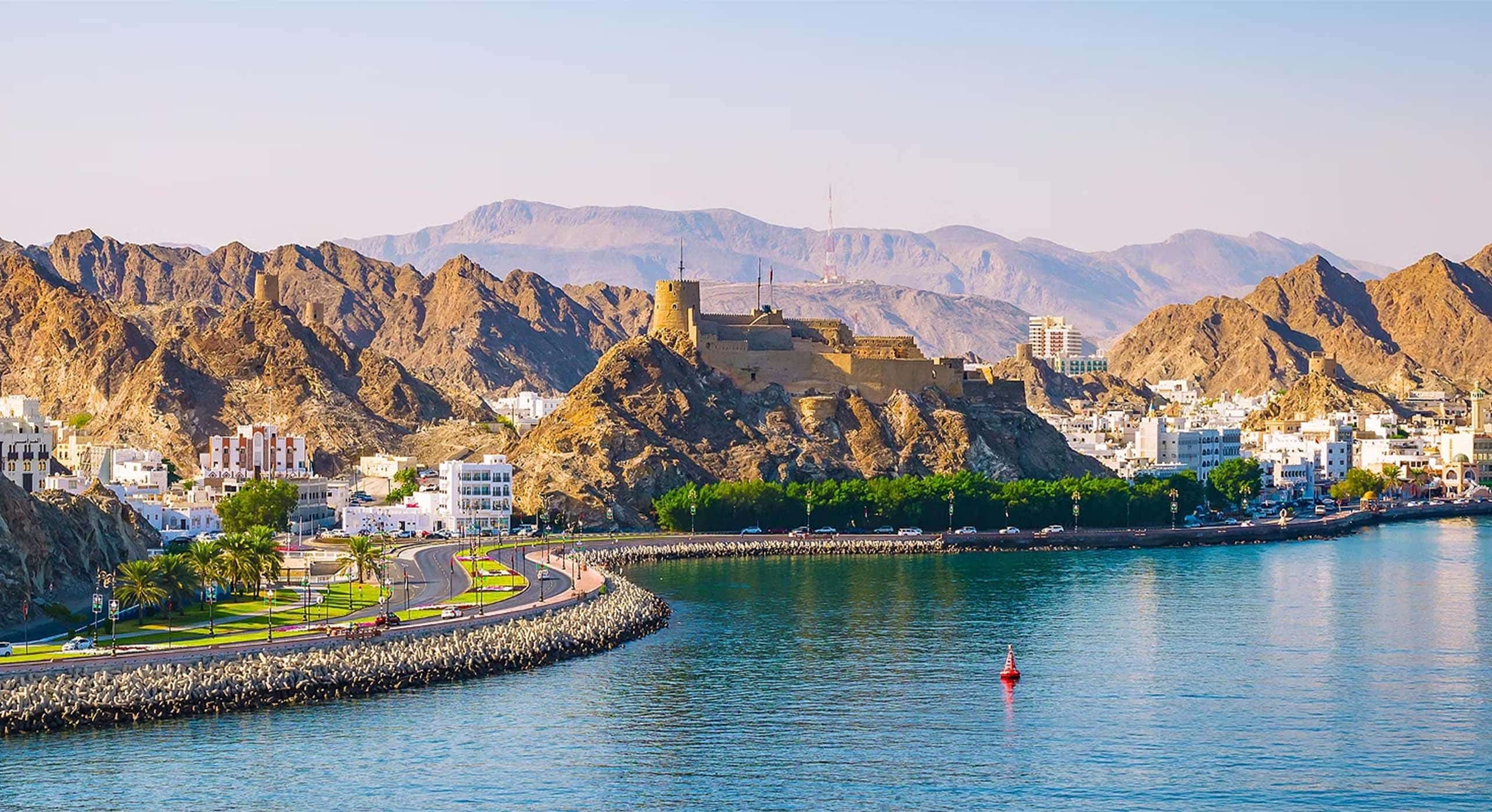
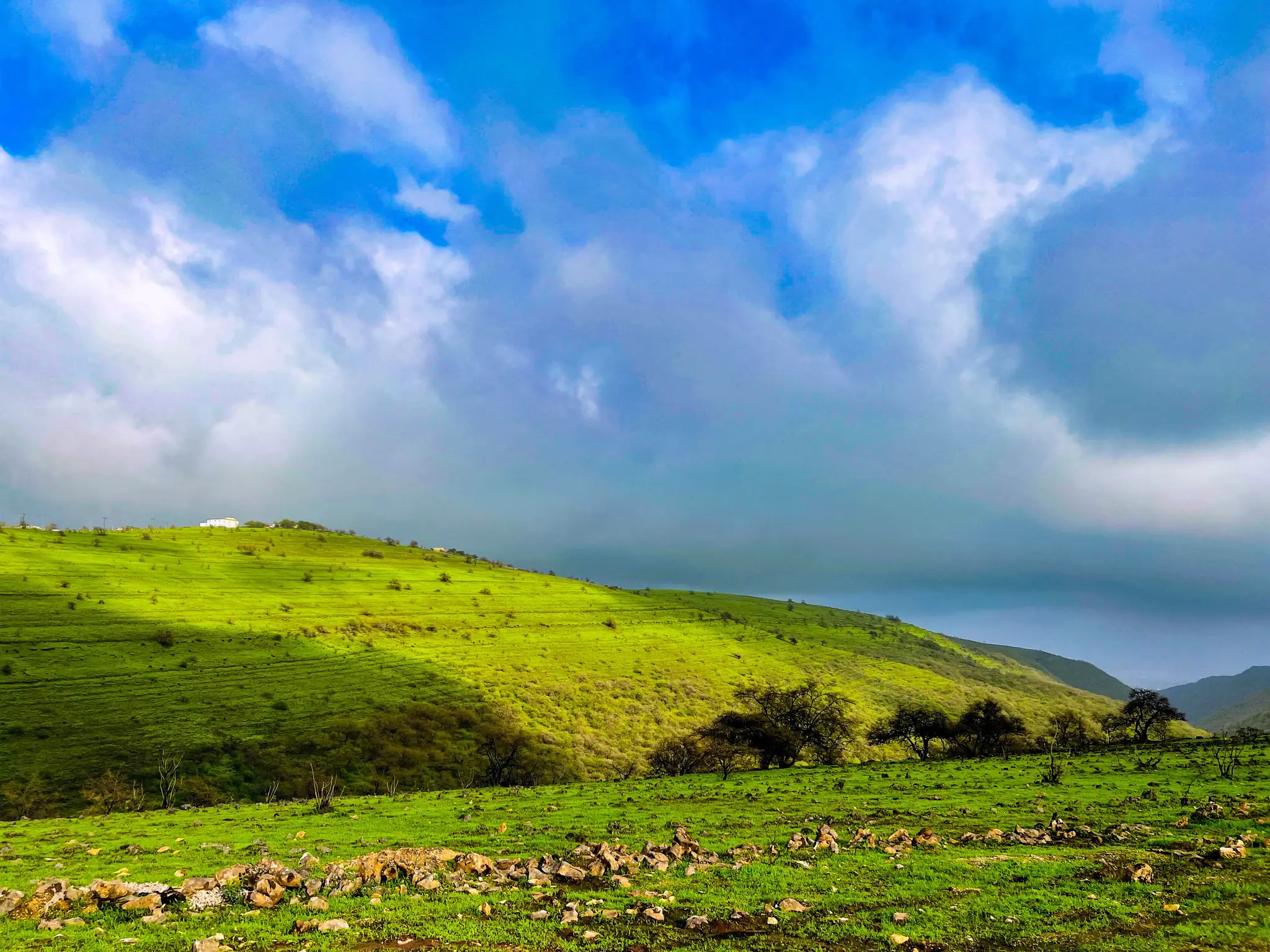
Oman has two climates that matter to a buyer. The northern coast, from Muscat along the Batinah and down to Sur, is hot and dry, with a short mild winter and a long summer. Dhofar in the south, around Salalah, catches the edge of the Indian Ocean monsoon: from late June to September its hills turn green under mist and drizzle, the season Omanis call the Khareef (الخريف), while the north is at its hottest. Choosing where to buy, when to view and how to run a home in Oman starts with these two calendars.
Weather in Muscat month by month
Figures for Muscat International Airport, 1991-2020 averages.
| Month | Average high | Average low | Rain | Humidity |
|---|---|---|---|---|
| January | 25.1°C | 16.7°C | 14.3 mm | 63% |
| February | 26.3°C | 17.8°C | 6.5 mm | 64% |
| March | 29.4°C | 20.3°C | 11.5 mm | 58% |
| April | 34.6°C | 24.7°C | 11.4 mm | 45% |
| May | 39.5°C | 29.1°C | 2.5 mm | 42% |
| June | 39.4°C | 30.4°C | 7.0 mm | 49% |
| July | 37.3°C | 30.0°C | 1.7 mm | 60% |
| August | 35.9°C | 28.4°C | 0.7 mm | 67% |
| September | 35.5°C | 27.1°C | 0.1 mm | 63% |
| October | 34.6°C | 24.7°C | 0.9 mm | 55% |
| November | 29.9°C | 21.0°C | 6.9 mm | 60% |
| December | 26.6°C | 17.9°C | 9.8 mm | 65% |
| Year | 32.8°C | 24.0°C | 73.3 mm | 58% |
Muscat has about 3,490 hours of sunshine a year. May and June are the hottest and driest months; July to September are slightly cooler by day but more humid, which is why late summer feels heavier on the coast. Winter nights fall to about 17°C, warm enough to sit outside in a light jacket.
Weather in Salalah and the Khareef
Figures for Salalah International Airport, 1991-2020 averages.
| Month | Average high | Average low | Rain | Rainy days | Humidity |
|---|---|---|---|---|---|
| January | 27.5°C | 19.3°C | 1.1 mm | 0.2 | 50% |
| February | 28.1°C | 20.0°C | 0.3 mm | 0.1 | 58% |
| March | 30.1°C | 22.1°C | 5.3 mm | 0.6 | 62% |
| April | 31.8°C | 24.9°C | 4.0 mm | 0.4 | 68% |
| May | 32.8°C | 27.1°C | 24.1 mm | 0.8 | 75% |
| June | 31.9°C | 27.6°C | 6.1 mm | 1.2 | 80% |
| July | 28.3°C | 25.0°C | 20.6 mm | 7.1 | 89% |
| August | 27.2°C | 24.2°C | 18.6 mm | 6.8 | 90% |
| September | 29.5°C | 24.8°C | 8.4 mm | 1.2 | 81% |
| October | 31.2°C | 23.3°C | 5.1 mm | 0.4 | 67% |
| November | 31.0°C | 22.4°C | 1.9 mm | 0.2 | 55% |
| December | 29.3°C | 20.8°C | 3.6 mm | 0.2 | 50% |
| Year | 29.9°C | 23.5°C | 99.1 mm | 19.2 | 69% |
The Khareef season starts on 21 June. In July and August the airport records about seven rainy days a month and humidity near 90%, though the totals are small: the rain falls as fine drizzle and mist. Salalah's year is milder than Muscat's at both ends: its hottest month, May, averages 32.8°C, and its coolest, January, 27.5°C.
The Khareef and property in Salalah
The Khareef turns Salalah into the Gulf's summer resort. Dhofar received 1,070,738 visitors in the 2025 season, and 1,116,051 between 21 June and 31 August 2026, 8.6% more than a year earlier. Visitor spending in the 2025 season was estimated at OMR 124.6 million. Of the 1,027,255 visitors counted to the end of August 2025, 734,225 were Omanis and 179,246 came from the other GCC states, and 776,191 arrived by road.
For an owner, that means strong summer demand for furnished homes and a quieter winter, the reverse of Muscat's pattern. A home at Hawana Salalah, Dhofar's Integrated Tourism Complex, can be let in the Khareef and used by the owner in winter. Outside the ITC, Dhofar is closed to foreign ownership except Salalah itself. The living in Salalah guide covers the city and the homes.
Cyclones and heavy rain
Cyclones reach Oman only occasionally, but they matter to a buyer. The Oman Observer's record lists Cyclone Gonu in 2007, "the most devastating storm in the Arabian Sea", Cyclone Phet in 2010, a severe tropical depression in 2020 that brought Dhofar the highest rainfall recorded in Oman, and Cyclone Shaheen in October 2021, which struck North and South Al Batinah and caused "significant damage to infrastructure and buildings".
Heavy rain in a dry country runs off fast. Before you buy, check:
- whether the plot or building lies on or near a wadi channel;
- the ground-floor level against the road and the drainage around the building;
- what the community's management does before a storm warning;
- whether your buildings insurance covers storm and flood damage.
Drainage and building levels vary from one community to the next, so we ask the developer for the drainage plan and the history of the plot.
Living with the heat
From May to September life moves indoors by day. Homes, cars, offices, malls and schools are air-conditioned, and outdoor activity shifts to early morning and evening. Cooling drives the electricity bill: on a primary account the regulator discounted bills by up to 20% from June to August 2026. When you buy, the details that keep a home comfortable are worth checking: shaded terraces and windows facing north rather than west, insulated walls and roofs, and a pool that is shaded or chilled. The cost of living guide gives the electricity tariffs.
Humidity, salt air and the upkeep of a coastal home
Muscat's humidity averages 58% over the year and rises to 67% in August; Salalah's passes 89% in July and August. Near the sea, warm damp air carries salt. For an owner that means regular servicing of air-conditioning units, sealed window frames, marine-grade fittings on terraces, and a dehumidifier in a home left closed for the summer. Ask the community management what its maintenance plan covers, and budget for the rest.
The best time to visit and view property
| Purpose | Best months | Why |
|---|---|---|
| Viewing homes in Muscat | November to March | Highs of 25°C to 30°C; developments show at their best |
| Beach and outdoor life in Muscat | November to April | Highs below 35°C |
| Seeing Salalah in the Khareef | Late June to September | The green season; book early |
| Mountains of the Hajar | November to March | Cool days, cold nights at altitude |
| Quiet viewings with developers | May to September | Fewer visitors, though the heat limits site walks to early morning |
Oman keeps Gulf Standard Time, UTC+4, all year. If you are planning a viewing trip, the visiting Oman guide covers visas, and the getting around guide the roads.