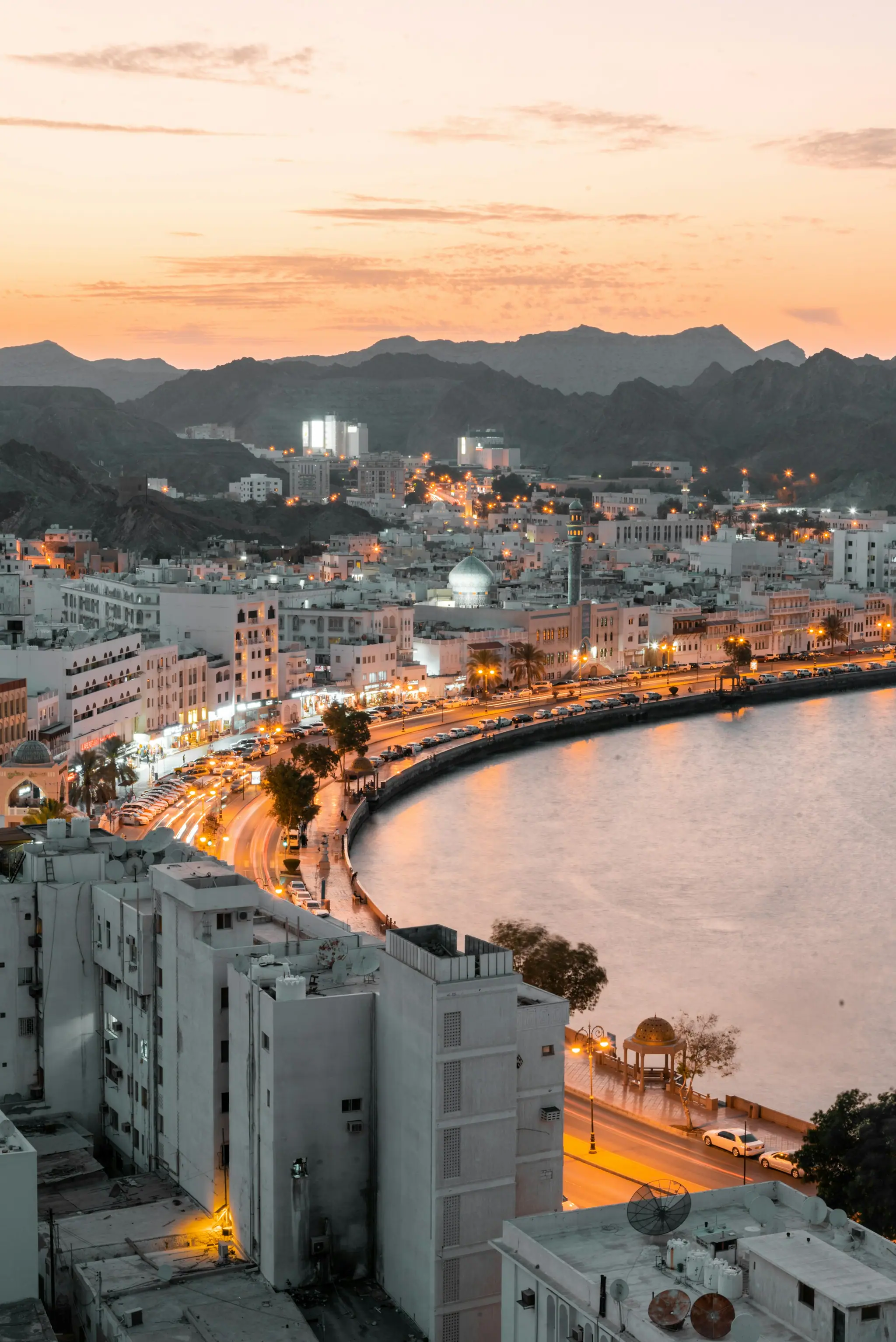
Living in Muscat: what to expect
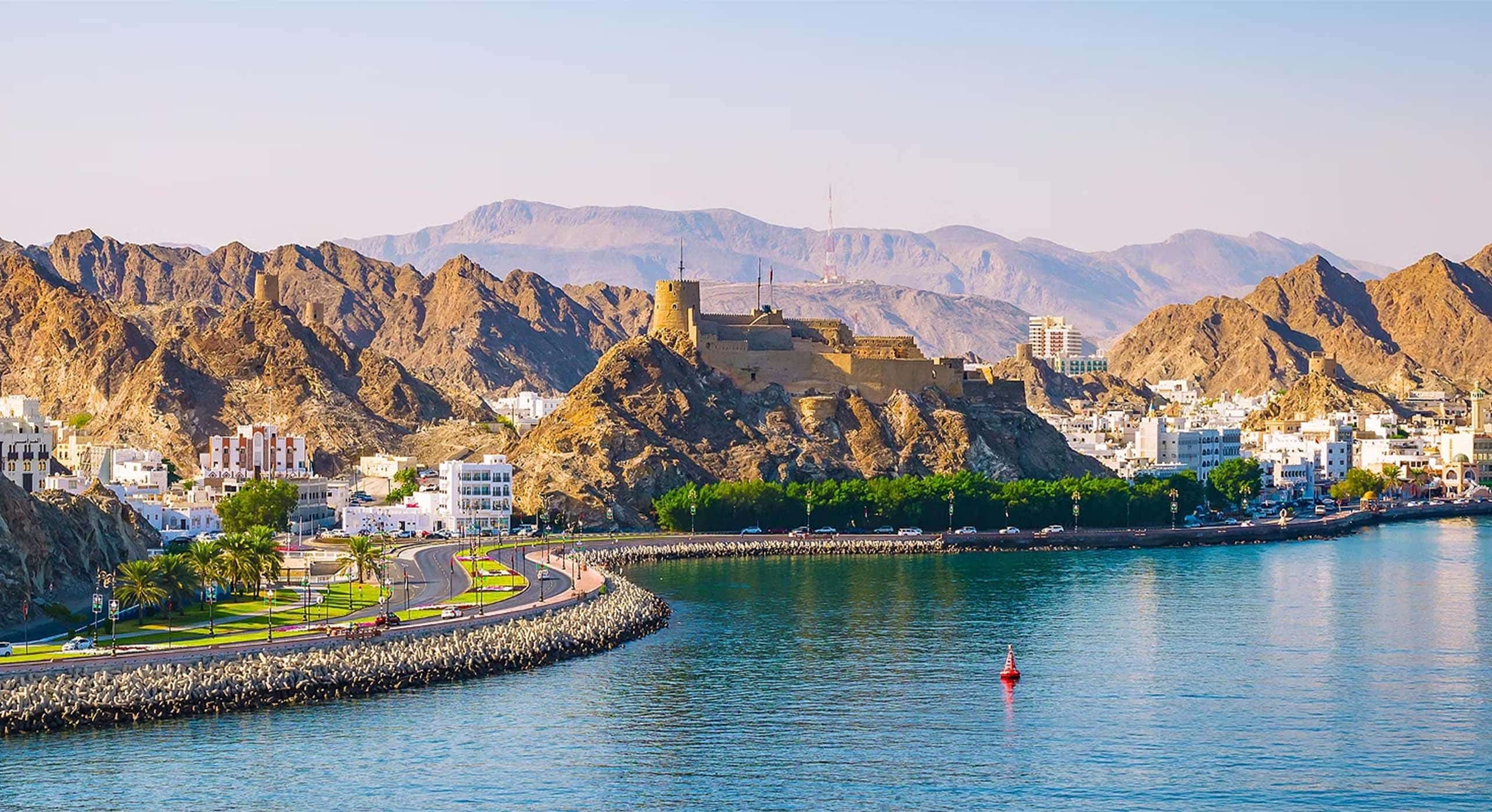
Muscat is a capital without a skyline. The city runs for kilometres along the coast between the Hajar mountains and the Gulf of Oman, low-rise and green along its main roads, with the old town and Muttrah's corniche at one end and the airport and Al Mouj at the other. Muscat Governorate had 1,542,619 residents at the end of June 2026, and 43.25% of Oman's 5,398,645 people were expatriates.
For newcomers the rhythm is set by three things: the car, because there is no metro; the heat from May to September, when life moves indoors by day; and the outdoors from November to March, when beaches, wadis and mountains are at their best. There is no tax on salaries until 2028.
Where expats live in Muscat
| District | Character | Who it suits | Can foreigners buy? |
|---|---|---|---|
| Al Mouj | Marina community on the Seeb coast, beach, golf course | Families and professionals who want everything on foot inside one community | Yes: an Integrated Tourism Complex (ITC) |
| Qurum and Shatti Al Qurum | Established villas and flats by Qurum beach and the Royal Opera House | Those who want the centre, the beach and older, larger homes | Not generally, outside new tourism projects |
| Al Khuwair | Ministries, offices and malls on the main road | Professionals who want a short commute | Usufruct flats for residents under the 2020 rules |
| Madinat Al Sultan Qaboos (MSQ) | Leafy villa district, long favoured by expatriates | Families renting a villa centrally | Not generally |
| Seeb suburbs: Al Hail, Al Khoudh, Al Mawaleh | Family villas, The Sultan's School, Sultan Qaboos University | Families on a budget, near the airport | Al Mouj and Sultan Haitham City inside the wilayat |
| Muscat Bay, Bandar Jissah, Yiti, AIDA | Resort coast east of the old town, bays and cliffs | Buyers who want the sea and quiet, and can live with the drive | Yes in the ITCs; AIDA's status is stated by its developer |
| Jebel Sifah | Marina resort town on the coast to the south-east | Second-home owners and those who work remotely | Yes: an ITC |
| Sultan Haitham City | New city being built in phases in Seeb | Long-term buyers at lower prices | Yes, a designated area for foreign ownership |
Rents in Muscat's districts
Savills' published averages for 2026:
| District | 2-bed apartment | 4-bed villa |
|---|---|---|
| Al Mouj (Q2 2026) | OMR 664 a month | OMR 1,700 a month |
| Muscat Hills (Q1 2026) | OMR 491 | OMR 1,200 |
| Qurum (Q1 2026) | OMR 350 | |
| MSQ (Q1 2026) | OMR 908 |
Qurum apartment rents rose 16% and MSQ villas 22% in the second quarter of 2026. The cost of living guide turns these into a monthly budget with utilities, petrol and schools.
Daily life in Muscat
The week. The weekend is Friday and Saturday, for the public and private sectors alike, so the working week runs from Sunday to Thursday. Friday midday prayers shape the start of the weekend.
Ramadan. Working hours shorten, eating and drinking in public by day is avoided by everyone, and evenings turn social. Plan viewings, moves and paperwork around it.
Shopping and food. Large malls in Al Khuwair, Qurum, Seeb and the airport district sit alongside the old souqs of Muttrah and Seeb.
Outdoors. Beaches run the length of the city; Al Mouj, Muscat Bay and Jebel Sifah have marinas, and the Hajar mountains and wadis are within a day trip.
Etiquette. Dress modestly in public places, cover shoulders and knees in souqs and government offices, and ask before photographing people. Alcohol is served in licensed hotels and restaurants. Greet with "as-salamu alaykum"; the reply is "wa alaykum as-salam".
Schools and healthcare
Muscat's established international schools are British School Muscat (British, OMR 4,400 to OMR 10,666 a year in 2026-27), The American International School of Muscat (OMR 5,790 to OMR 11,560), ABA Oman International School (IB) and Royal Grammar School Guildford Muscat (British, opened 2023). The schools guide has the full fee tables.
For healthcare, the UK Foreign Office's 2026 list names internationally accredited private hospitals in Al Khuwair, Ghubrah, Al Hail, Ruwi and Al Khoud, alongside the public Royal Hospital and Khoula Hospital. Save 9999 for emergencies. The healthcare guide explains who is treated free and how insurance works.
Getting around Muscat
There is no metro: the Muscat Metro, about 50 km from Sultan Haitham City to Ruwi, was still at feasibility study in January 2026. Most households drive; petrol was 229 baisa a litre for M91 at the end of October 2026. Mwasalat city buses take cards only since August 2026. Al Mouj is about 15 minutes from the airport by car, Qurum about 25, Muscat Bay and AIDA about 50. The getting around guide has the full table.
Owning a home in Muscat as a foreigner
Foreign ownership is limited to designated areas. In June 2026 the Ministry of Housing and Urban Planning named them as the Integrated Tourism Complexes, the future cities including Sultan Haitham City, and integrated residential neighbourhoods such as Surouh. Inside an ITC any nationality may own, and under Royal Decree 12/2006 the owner of a built unit may be granted residence for himself and his first-degree relatives. Resident expatriates could also buy usufruct flats in approved buildings in parts of Muscat under the 2020 rules, without a visa attached.
Most expatriates who buy in Muscat choose Al Mouj for an established community, the resort coast for the sea, or Sultan Haitham City for price. The ITC homes for sale list shows what is available, and the residency guide explains how a home can carry a residence visa.
Rent first, or buy now?
Many newcomers rent for six to twelve months, learn the school run and the communities, and then buy. That works well in Muscat because the rent gap between districts is wide and easy to test: a two-bedroom flat at OMR 350 a month in Qurum against OMR 664 at Al Mouj. Buying straight away suits two kinds of buyer. One already knows the city. The other needs a residence that does not depend on an employer: an owner of a residential unit in an ITC can hold the ROP's two-year owner residence visa, OMR 50, and a completed ITC home of OMR 200,000 or more opens the Golden Residency. At Al Mouj, two-bedroom homes at ALMAR Residences start at OMR 164,967 before VAT, against an average rent of OMR 7,968 a year.
Is Muscat right for you?
Muscat suits people who want space, the sea and the mountains within reach, and a slower pace than Dubai or Riyadh. It suits less those who want a metro, a dense nightlife or a short summer. Spend a week here in the cool season and another in the heat before you commit, and drive the school and office runs at rush hour. The living in Oman guide compares Muscat with Salalah and the rest of the country.