Roads and ports are moving Omani property values now. Rail and metro are not, yet. The Al Batinah Expressway has been open since 2018 and the ports at Sohar, Duqm and Salalah are operating. Hafeet Rail, the line from Sohar to Abu Dhabi, was about 40% complete in April 2026 with no firm opening date. The Muscat Metro is still a feasibility study.
For a buyer the rule is simple: pay for access that exists, and treat announced access as a possible bonus.
What is built, and what is only announced
| Project | Status | What it means for a buyer today |
|---|---|---|
| Al Batinah Expressway, about 256 km from Muscat to the UAE border | Open since 2018 | Already reflected in demand along the Batinah coast |
| Hafeet Rail, 303 km from Sohar to Abu Dhabi | About 40% complete in April 2026. Due to open around the end of the decade. No date fixed | A next-decade factor for Sohar and the border corridor |
| Muscat Metro, about 50 km and around 36 stations | Feasibility stage. No confirmed route, cost or timetable | Do not pay extra for a station that is not on a confirmed map |
| Road programme, about 1,120 km | Under construction in 2026 | Opens outer districts and governorates over the next few years |
| Airports, National Aviation Strategy 2040 | Six new airports planned, in phases to 2040 | Medium-term support for Sohar, Salalah and Duqm |
Status as reported in the group's connectivity report, published in June 2026 and updated in November 2026.
Roads: the effect you can already see
The Al Batinah Expressway is an eight-lane road built for about RO 800 million. It starts at Halban on the Muscat Expressway, passes Sohar Port and ends at the Khatmat Malaha crossing into the UAE. It has pulled logistics and housing demand towards the Batinah coast.
The land index shows it. In the second quarter of 2026, residential land in Al Batinah North, the governorate that includes Sohar and the road to the UAE, was 29.0% higher than a year earlier and rose 24.8% in the quarter alone. In Al Batinah South, which includes Barka, the annual rise was 18.9%. The Ministry of Housing said roughly one in three transactions in March 2026 involved a buyer from the UAE, with Sohar their second choice after Muscat. The index does not say who bought.
More road is coming. About 1,120 km is being built in 2026, a programme costing roughly RO 1.2 billion, and a 40 km dual carriageway between Nizwa and Bahla was tendered in 2025. In western Muscat, an RO 40 million package of roads, bridges and underpasses links Sultan Haitham City to the Muscat Expressway.
West of the capital, family developments such as Hai Al Naseem in Barka sit on this corridor.
Hafeet Rail: real, but years away
Etihad Rail, Oman Rail and Mubadala are building Hafeet Rail together, at an estimated cost of about USD 3 billion. The part under construction is a cross-border section of roughly 238 km ending at Sohar Port. Construction started in 2024. By April 2026 the line was about 40% built and track was being laid. Passenger trains are designed to cover Sohar to Abu Dhabi in about one hour and forty minutes.
There is no confirmed opening date. The wider Gulf ambition for a rail network by 2030 is a regional target, not a completion date for this line. Land near the future Sohar terminal is being positioned early, but a price that assumes a running railway is premature.
Muscat Metro: a plan, not a project
The proposal is for Oman's first urban railway: a network from Sultan Haitham City to the Ruwi business district by way of Muscat International Airport and two planned downtown districts, Ghala and Al Khuwair. In January 2026 the government said it would announce full details within two months. Planning documents have varied between about 50 km with 36 stations and 55 km with 42.
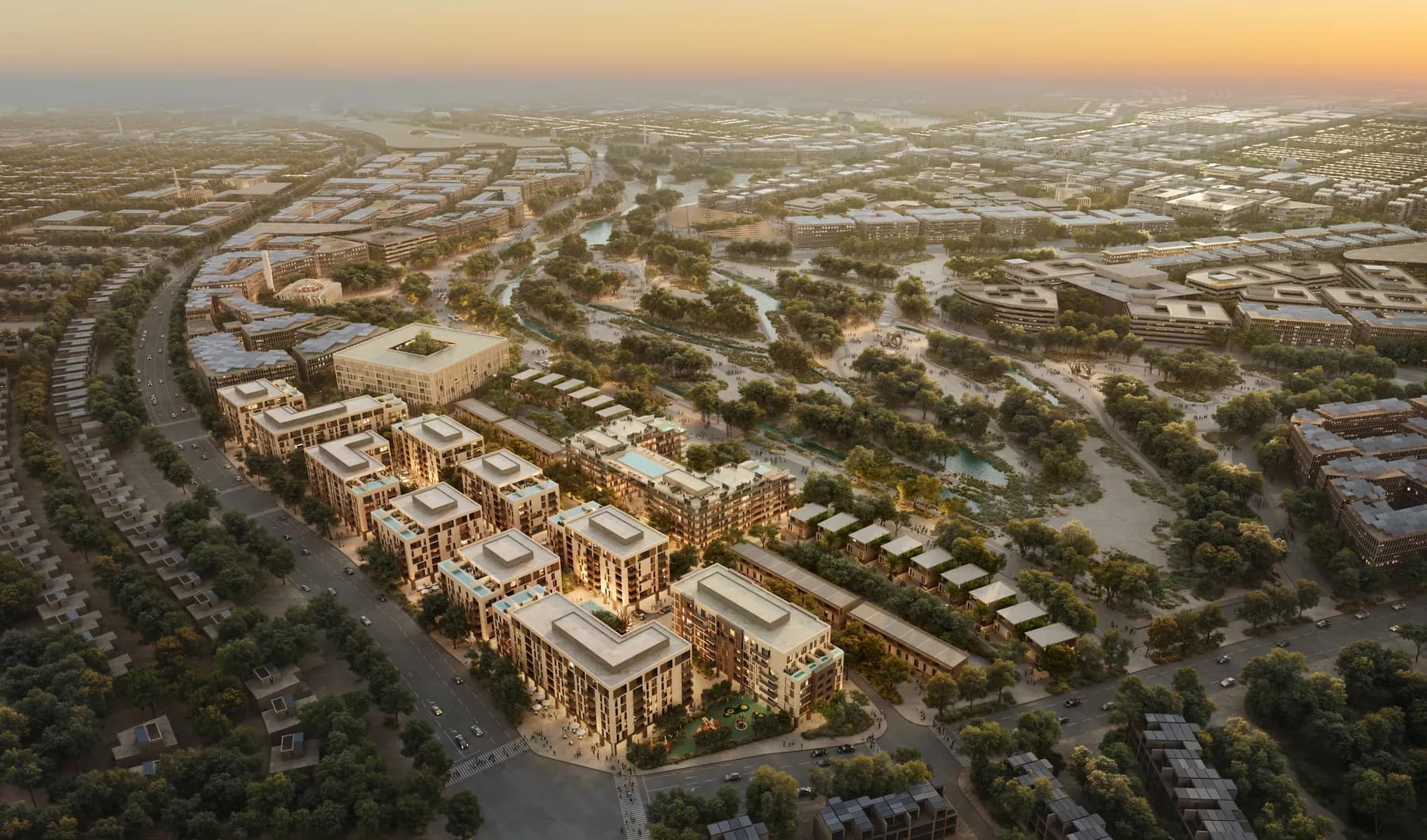
Until a route is fixed, any claim that a home is "near the metro" is speculation. Homes in Sultan Haitham City should stand on today's road access. At Wadi Zaha, for example, the developer puts the Muscat Express and Batinah highways about 8 minutes away and the airport about 30 minutes.
Airports and ports
About 15.2 million passengers used Oman's airports in 2025, roughly 11.8 million of them at Muscat International. The aim under the National Aviation Strategy 2040 is over 40 million a year, with six new airports built in three phases. A USD 130 million agreement for an airport city beside Muscat International followed in June 2026.
For homebuyers the delivered part is what counts. Al Mouj Muscat is about ten minutes from the airport by developers' estimates, and that is true today.
Ports create jobs, and jobs create housing demand. Duqm combines a deep-water port with a special economic zone on the open-sea side of the Strait of Hormuz, and has attracted investment commitments of around USD 38 billion. Sohar anchors the Batinah industrial corridor, and Salalah supports tourism in Dhofar.
Two cautions apply. Port areas were not untouched by the 2026 regional conflict: fuel storage at Duqm port was hit by drones in early March, and Salalah port on 11 March, when terminal operations there were suspended. And a growing town is not automatically open to foreign buyers. Non-Omanis can own only in designated areas, so check that first.
Where the effect is landing
The gains are concentrated in three places: the Batinah coast and Sohar, the port cities of Duqm and Salalah, and western Muscat around the airport and Sultan Haitham City.
Muscat shows the scale and the limit. Residential land in the governorate was 41.3% higher in the fourth quarter of 2025 and 40.6% higher in the second quarter of 2026, each against a year earlier. It was then 2.0% lower in the second quarter of 2026 than in the first, an early sign of a pause.
Land is not the same as a finished home. Over the same year to the second quarter of 2026, apartment prices rose 17.2% and villa prices 10.8% nationally. The market data page tracks these figures.
How to use this as a buyer
Ask one question of every infrastructure claim in a brochure: is it open, under construction or proposed? Then test the journey yourself at the time of day you would travel.
Judge the home on evidence that exists today: rents for similar homes, occupancy in the community and the developer's record. Compare asking prices in the price table. Property values and rents can fall as well as rise, and off-plan projects can be delayed. A premium paid for a railway can sit idle for years if the line is late.
The bottom line
- Delivered roads and working ports are what move Omani property values today.
- Hafeet Rail was about 40% complete in April 2026, with no confirmed opening date.
- The Muscat Metro is at feasibility stage, with no confirmed route, cost or timetable.
- Residential land in Al Batinah North rose 29.0% in the year to Q2 2026, and Muscat land 40.6%.
- Pay for access that exists. Treat announced rail and metro as a possible bonus.
What to check before you reserve
- Whether each road, station or airport in the sales material is open, under construction or proposed.
- Real journey times to work, school and the airport.
- That the area is one where a buyer with your passport can own.
- Rents and resale evidence for comparable homes nearby.
- The steps and costs in our buying guide.
Frequently asked questions
When will the Oman to UAE railway open?
No date is confirmed. Hafeet Rail was about 40% complete in April 2026 and is due to open around the end of the decade.
Is the Muscat Metro confirmed?
Not yet. As of early 2026 it was at feasibility and planning stage, with no confirmed route, cost or timetable.
Which areas of Oman benefit most from new infrastructure?
The Batinah coast and Sohar, the port cities of Duqm and Salalah, and western Muscat around the airport and Sultan Haitham City. These are where delivered roads and ports sit closest to planned rail.
Will a metro station raise the value of my home?
Stations have tended to lift values within walking distance in other cities, but Muscat has no confirmed alignment. Until it does, any uplift tied to a specific station is speculative.